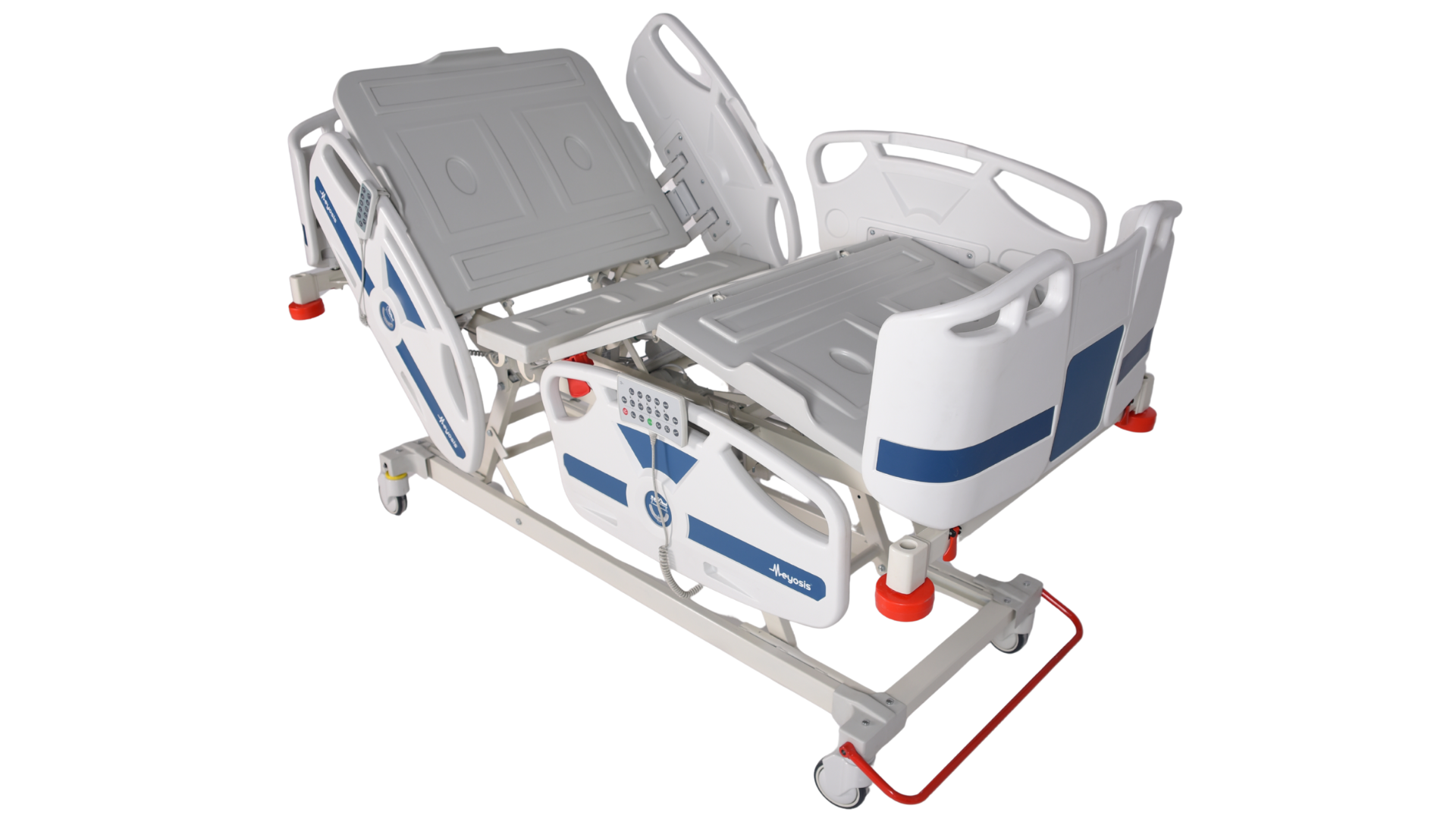
Electric hospital beds have become a standard solution in modern healthcare facilities due to their ability to improve patient safety, clinical efficiency, and caregiver ergonomics. Compared to manual beds, electric hospital beds offer advanced positioning options and reduce physical workload for healthcare staff.
This article explains the technical structure, clinical benefits, and key selection criteria of electric hospital beds used exclusively in hospital environments.
What Is an Electric Hospital Bed?
An electric hospital bed is a medical bed equipped with electric motors that allow automated adjustment of different bed sections using a remote control or integrated control panel.
Electric beds are designed for continuous professional use in:
- Hospitals
- Clinics
- Rehabilitation centers
- Intensive care and post-operative units
They are not intended for home-care or residential use.
Types of Electric Hospital Beds by Motor Configuration
Electric hospital beds are classified based on the number of motors and functions they provide.
Two-Motor Electric Hospital Beds
Functions typically include:
- Backrest adjustment
- Leg section adjustment
Suitable for:
- General hospital wards
- Short- to mid-term inpatient care
Three-Motor Electric Hospital Beds
Additional functions include:
- Height adjustment of the bed platform
Advantages:
- Easier patient transfer
- Improved caregiver ergonomics
Suitable for:
- Standard hospital departments
- Long-term patient care units
Four or Five-Motor Electric Hospital Beds
Advanced motor systems allow:
- Trendelenburg and reverse Trendelenburg positioning
- Full bed height control
- Complex patient positioning
Suitable for:
- Intensive care units
- High-dependency wards
- Specialized clinical environments
Four or Five-Motor Electric Hospital Beds
Advanced motor systems allow:
- Trendelenburg and reverse Trendelenburg positioning
- Full bed height control
- Complex patient positioning
Suitable for:
- Intensive care units
- High-dependency wards
- Specialized clinical environments
Key Technical Advantages of Electric Hospital Beds
Improved Patient Comfort and Safety
Electric adjustments allow patients to change positions smoothly, reducing:
- Pressure injuries
- Respiratory complications
- Discomfort during long hospital stays
Side rails and controlled positioning significantly lower fall risks.
Precision Positioning for Clinical Procedures
Electric hospital beds enable precise positioning required for:
- Post-operative recovery
- Respiratory care
- Diagnostic procedures
Accurate positioning directly supports better clinical outcomes.
Enhanced Infection Control
Modern electric hospital beds are designed with:
- Antibacterial surfaces
- Easy-to-clean materials
- Sealed motor systems
These features help reduce the risk of hospital-acquired infections (HAIs).
Essential Technical Specifications to Consider
Load Capacity
Electric hospital beds must support a wide patient weight range.
- Standard electric beds: 200 kg
- Advanced and ICU beds: 250 kg or more
Essential Technical Specifications to Consider
Load Capacity
Electric hospital beds must support a wide patient weight range.
- Standard electric beds: 200 kg
- Advanced and ICU beds: 250 kg or more
Electrical Safety Systems
Critical safety features include:
- Emergency manual override
- Secure cable management
- Compliance with medical electrical safety standards
Modular Design
Modular components allow easy replacement of:
- Side rails
- Headboards
- Wheels and accessories
This ensures long-term cost efficiency.
Electric Hospital Beds as a Strategic Hospital Investment
Electric hospital beds provide measurable benefits for hospitals by improving patient comfort, enhancing staff safety, and supporting clinical workflows. While the initial investment is higher than manual beds, the long-term advantages far outweigh the cost.
Hospitals seeking reliable, compliant, and durable patient beds should prioritize electric hospital beds designed specifically for professional healthcare environments.