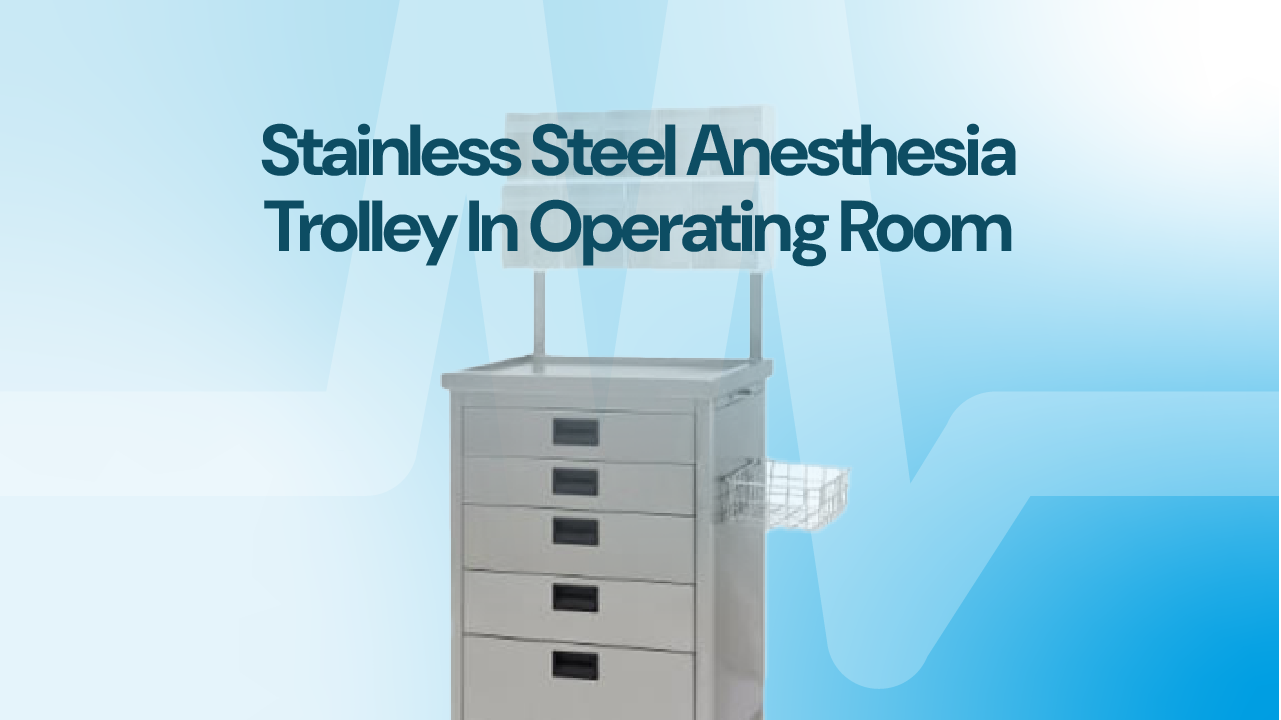
Operating rooms are the most critical, dynamic, and error-intolerant units within hospitals. The success of surgical operations performed in these areas and the safety of the patients depend not only on the expertise of healthcare professionals but also directly on the quality, ergonomics, and functionality of the medical equipment used. During surgical interventions, it is of vital importance that anesthesiologists have seamless, split-second access to narcotic medications, essential medical consumables, and intubation equipment. This is precisely where a stainless steel anesthesia cart comes into play to ensure operational speed and top-tier infection control. Designed to meet the rigorous and uncompromising demands of operating room environments, these carts have become an indispensable component of modern hospital infrastructure and surgical process management.
Why is Stainless Steel Preferred in Operating Room Environments?
The choice of materials used in the manufacturing of medical equipment is not a random aesthetic preference; it is a strategic decision that directly impacts clinical outcomes. In areas like operating rooms where sterilization must be maintained at the highest level, the structure of medical furniture must minimize infection risks and withstand intensive use.
Maximum Hygiene Standards and Infection Control
Hospital-acquired infections (nosocomial infections) are among the greatest risks health institutions combat worldwide. A stainless steel anesthesia cart, thanks to its non-porous surface structure, significantly prevents microorganisms, bacteria, and viruses from adhering, reproducing, or colonizing. Furthermore, it exhibits extraordinary resistance to heavy chemical disinfectants, abrasive cleaning solutions, and UV sterilization processes routinely used in operating rooms. Unlike plastic or painted metal alternatives, stainless steel does not peel, crack, or corrode
over time; this means the surface integrity is preserved for years, reducing the risk of cross-contamination to zero.
Long-Lasting Durability Against Demanding Conditions
Operating rooms are fast-paced areas where devices are constantly relocated, and stretchers, monitors, and other heavy equipment are moved rapidly. In this dynamic environment, medical carts are expected to withstand impacts, collisions, and heavy loads. The structural integrity of stainless steel supports a high weight capacity while simultaneously acting as a shield against mechanical deformations. For hospital purchasing managers, the total cost of ownership (TCO) is a critical metric in equipment procurement. Although stainless steel products require a certain initial investment, they offer the most efficient long-term solution for the hospital budget thanks to their extended service life and minimal maintenance requirements.
Customizable Drawer Configurations Tailored to Needs
The internal organization and modular structure of an anesthesia cart determine operational efficiency just as much as its exterior surface. Since anesthesia processes vary depending on the patient’s condition and the type of surgery, flexible solutions are required rather than fixed and restrictive storage spaces.
Quick Access and Ergonomics in Emergencies
In critical moments, reaching the right medication or the correctly sized airway tube requires a race against seconds. Specially designed drawer dividers (separators) allow medication ampoules, syringes, and vials to be arranged systematically without getting mixed up. The fact that the drawers can be fully opened thanks to telescopic rail systems ensures that even the items at the very back can be accessed without any blind spots. In addition, combination or centralized locking systems secure narcotic drugs and prevent unauthorized access, while still allowing the anesthesiologist to access all drawers in a single motion during an emergency.
Modular Design Compliant with Hospital Protocols
The anesthesia requirements of different surgical branches (for example, cardiovascular surgery versus pediatric surgery) vary. Customizable drawer configurations allow each operating room to reshape the interior design of the cart according to its own internal workflow and material usage frequency. Designing the upper drawers to be shallower and the lower drawers to be deeper for bulky items like IV fluids establishes an ergonomic standard of use.
Critical Standards in Professional Hospital Equipment Procurement
Hospital administrators and purchasing departments must focus not only on functionality but also on the engineering and certification processes behind the product when selecting clinical equipment. The production of medical devices is strictly tied to international norms.
International Quality Management: The Importance of ISO-13485 Certification
The ISO-13485 standard, developed specifically for medical devices and equipment, is the clearest indicator that a manufacturer meets international quality requirements in design, production, installation, and service processes. The fact that a stainless steel anesthesia cart model to be purchased is manufactured in facilities with an ISO-13485 certification guarantees that every stage, from the biocompatibility of the material to mechanical safety, has been audited. This document serves as a legal and technical assurance for hospital management that the equipment is fully compliant with international health standards.
Reliable and Professional Solutions with Meyosis
The growing needs of modern healthcare facilities demand more than just a product from medical furniture manufacturers; they require a comprehensive solution partnership. In this context, Meyosis, which manufactures medical carts with customizable drawers, adds value to the workflow processes of hospitals by directly integrating anesthesia carts into its professional product range. Offering quality assurance through ISO-13485 certified production processes, Meyosis anesthesia carts stand out with their durable stainless steel bodies and drawer layouts that can be shaped according to the specific needs of the hospital. For both infection control committees unwilling to compromise on hygiene standards and hospital purchasing managers in search of long-lasting and cost-effective equipment, Meyosis products serve as a natural reference point with proven reliability.
Investing in the right equipment reduces stress factors in the operating room, allowing healthcare professionals to focus entirely on the patient and surgical success. A high-quality anesthesia cart is much more than an ordinary storage unit; it is the silent, sturdy, and flawlessly functioning assistant of life-saving procedures.